

 LinkedIn
You can buy an ad near an AI Overview. You cannot buy a citation inside its answer. That distinction sounds obvious until you have spent years solving search problems with bids, match types, and a spreadsheet.
I understand the reflex. In Google Ads, a competitor takes ground on a high-intent term and you adjust the campaign: change the target CPA, tighten the keyword structure, check the landing page. When AI Overviews appeared, the familiar questions followed. Where is the placement setting? What do I bid? How do I track my position?
AI citations do not run on the ad auction. Prompts are not keywords, cited pages have no Quality Score, and waiting for an answer to finish a learning phase will not make your source stick. Those habits feel like competence because they work elsewhere. Here are the six beliefs I would unlearn first, and what I would do instead.
“I’ll just buy my way in with AI Overview ads”
This is the most tempting shortcut. Rebuilding product pages takes work; paying Google to put an ad in the answer sounds familiar. But Google’s support documentation says advertisers cannot directly target AI Overviews or opt out of them. There is no dedicated AI Overview ad group, placement bid adjustment, or switch that buys a citation. Eligible ads from Search and Performance Max campaigns may appear when they win the normal auction and match the query and dynamically generated text. For standard Search campaigns, Google requires broad match or keywordless targeting.
An ad beside the answer is not a source inside it
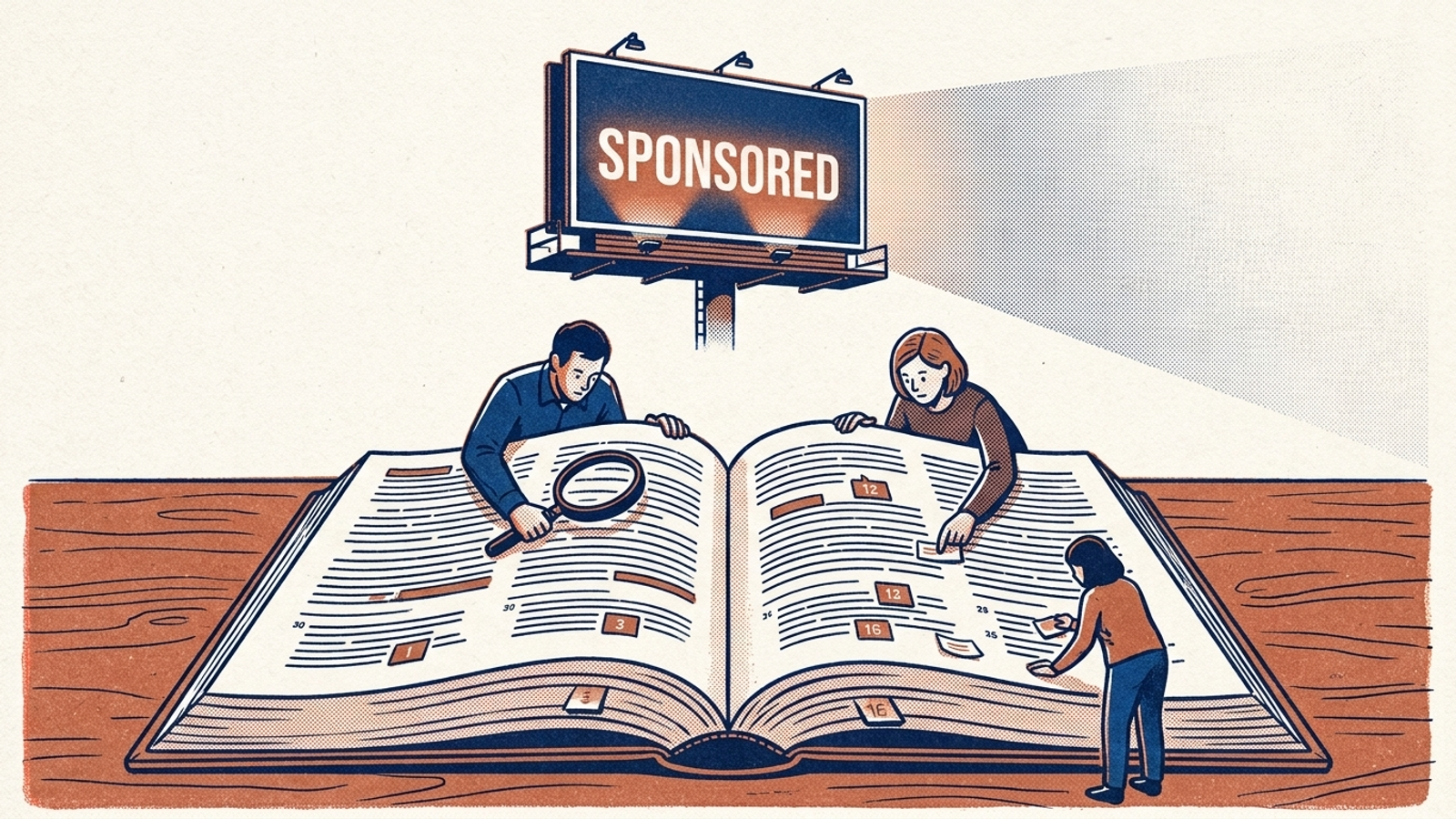
Sponsored visibility and citation are different outcomes. An ad can appear near an AI Overview without becoming evidence for its answer. That difference matters when you try to measure what your spend bought. As PPC practitioners note in r/PPC discussions, AI Overview ad impressions are bundled into generic “Top Ads” reporting. You cannot isolate AI Overview spend, click-through rate, or CPA from that reporting. Broad match may put you near the answer, but it does not tell you whether the placement paid off.
A citation does another job: it appears as a source for the synthesized response. As I argued in what Google Ads gets wrong about ChatGPT and Perplexity citations, an ad badge cannot buy that kind of source credibility. Keep evaluating ads as ads. If you want the page cited, work on the page and the evidence around it.
“Prompts are just long-tail keywords”
Long-tail terms are comfortable territory for a PPC manager. Say commercial hvac repair costs $65 a click. You might build an exact-match variant such as emergency rooftop hvac repair dallas 24 hour, give it its own ad copy, and watch what it costs to convert. So a prompt like “Which dental billing software handles multi-location practices with out-of-network claims?” looks, at first, like an unusually wordy keyword.
It is not. A prompt is a request to assemble an answer, not a string waiting to match an ad group. The engine can break that request into smaller questions, retrieve sources about products and capabilities, and synthesize a response. The wording and cited sources need not behave like a fixed search-term-to-keyword match.
The movement is not just theoretical. In an analysis of 82,619 prompts over 17 weeks, SISTRIX found that 86% of prompts retained a small, stable core of citations while other cited sources churned at an 89% weekly rate. Google AI Mode replaced 56% of cited URLs every seven days; ChatGPT replaced 74%.
That does not make buyer prompts useless. It changes what you do with them. Use a prompt to understand the buyer’s question and the facts an answer needs. Then make those facts easy to find on your pages. Do not build a new ad-group-style content page for every slight variation in phrasing.
“There’s a Quality Score for citations”
A PPC manager can spend a late night trying to move a Quality Score from 6 to 8: align the ad with the query, tighten the landing page, try again. It is natural to look for an equivalent citation report card. If there is no score, perhaps top organic rank or a powerful domain is close enough.
The evidence makes that shortcut hard to defend. Ahrefs examined 863,000 search result pages and 4 million AI Overview URLs and found that only 37.9% of cited URLs ranked in Google’s organic top 10 for the query. Another 31.0% sat outside the top 100. Organic rank still matters to a search program; it just is not a citation guarantee.
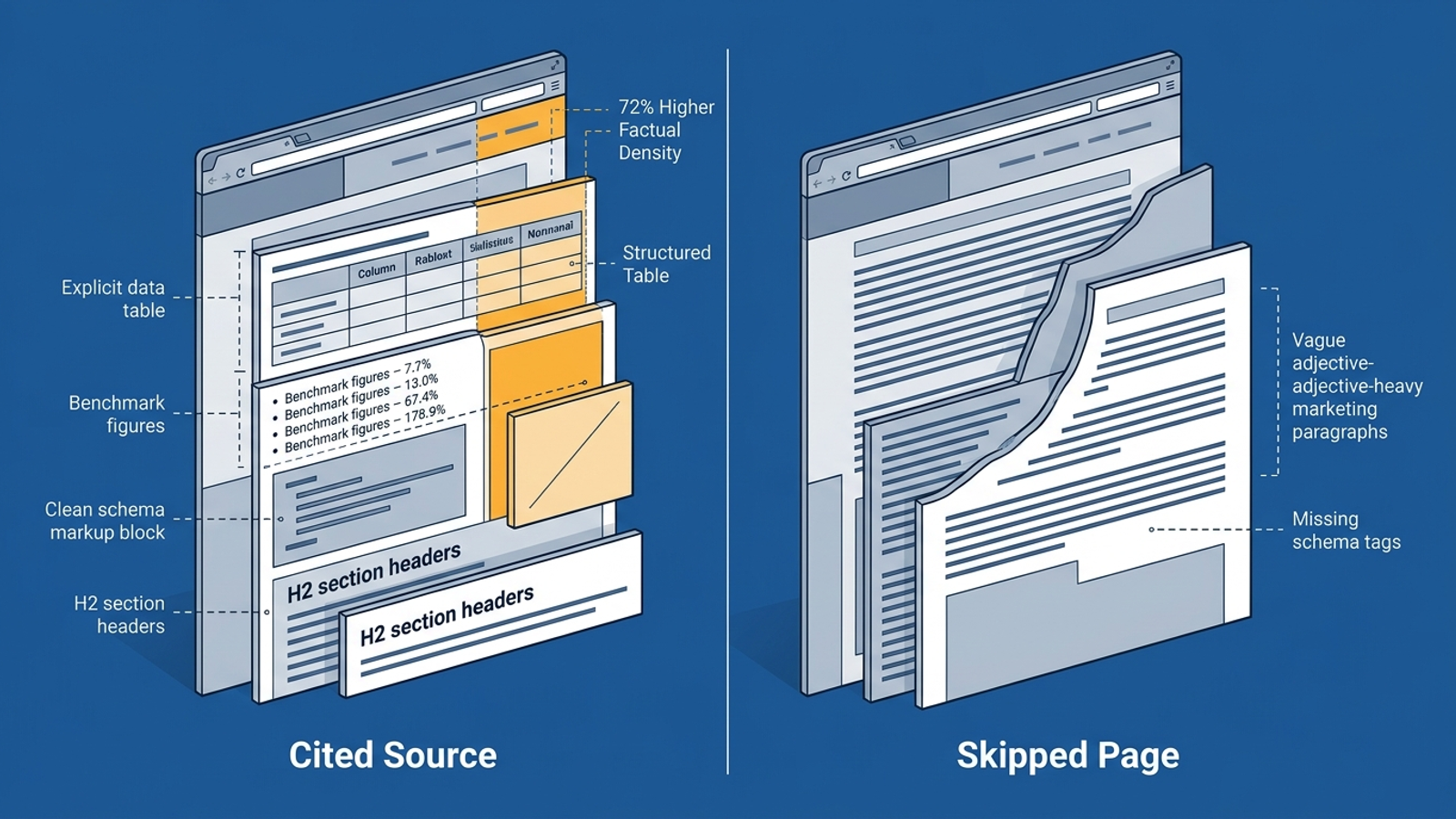
The page itself gives the engine something to extract. In a study of 52,400 AI Overview instances, Presenc.ai found that cited pages had 72% higher factual density than non-cited pages at the same organic position. Among cited pages, 81% carried hard statistics, compared with 47% of non-cited pages; 38% included structured tables, compared with 12%; and 72% had schema markup. That fits the move from featured snippets to AI Mode: a clear, extractable answer gives a retrieval system more to work with than another paragraph of polished adjectives.
Do not turn those figures into a new secret score. Give the engine specific, readable facts to cite: product details, comparisons, figures where you have them, and markup that accurately describes the page. A fat backlink portfolio cannot supply a missing answer.
“Give it a learning phase and it’ll settle”
PPC teaches patience for a reason. Launch Performance Max or switch a Search campaign to Target CPA and you may see a Learning label for seven to fourteen days. Constant changes can make it harder to judge what the bidding system is doing. Bring that rule into AI citations, though, and you may spend a month waiting for a stable footprint that never arrives.
A page can be cited quickly and disappear quickly
In a controlled experiment with 81 test pages, SearchOS found that Google AI Mode indexed and cited 36% of new pages within the first 24 hours. The citation rate peaked at 56% by day seven, then fell to 26% by day 30. Alongside the citation churn SISTRIX observed, that is a poor basis for treating visibility like a bid strategy finding its steady state.
The cost of waiting is practical. A page may get cited soon after it is updated, then lose that place while you are still telling the team not to touch anything. If the answer changes, inspect what it now cites and what those sources answer more clearly. Keep your useful facts current, check that the page is readable, and revisit gaps you can actually fix. Do not mistake silence for the discipline of leaving a campaign in Learning.

“I can track citations like rankings in a spreadsheet”
I like a spreadsheet as much as the next person who has had to explain search lost impression share before breakfast. A list of buyer prompts, checked every morning, looks like the start of a sensible AI visibility report. But a daily manual check captures one version of an answer. Tomorrow’s response may cite different pages, and a tidy rank column hides what the answer actually said.
A single prompt check is a snapshot, not a position. Seeing your brand once can create false confidence; missing it once can create false panic. You can automate structured snapshots, as I laid out in a weekly AI brand monitor using Google Sheets and three APIs. That does not mean more rows always make a better decision. Tracking five hundred prompt variations across eight engines burns API credits and review time if nobody can say what action the report should trigger.
Start with twenty high-intent questions buyers ask your sales team. Check category presence, brand attribution, and the tone of the answer. Once a week, read the synthesized text rather than only counting appearances. Which source supplied the feature claim? Did the answer describe your product correctly? What did a cited competitor page make easier to understand? That is a more useful work order than a red cell saying you moved down one position in a ranking that does not stay put.
“If they crawl my site, they’ll cite my site”
In paid search, you control the destination. You write the landing page, install the tracking pixel, test the headline, and send the click to your domain. So it is tempting to treat indexing as the AI equivalent: once the crawler can read your site, the model has what it needs to recommend you.
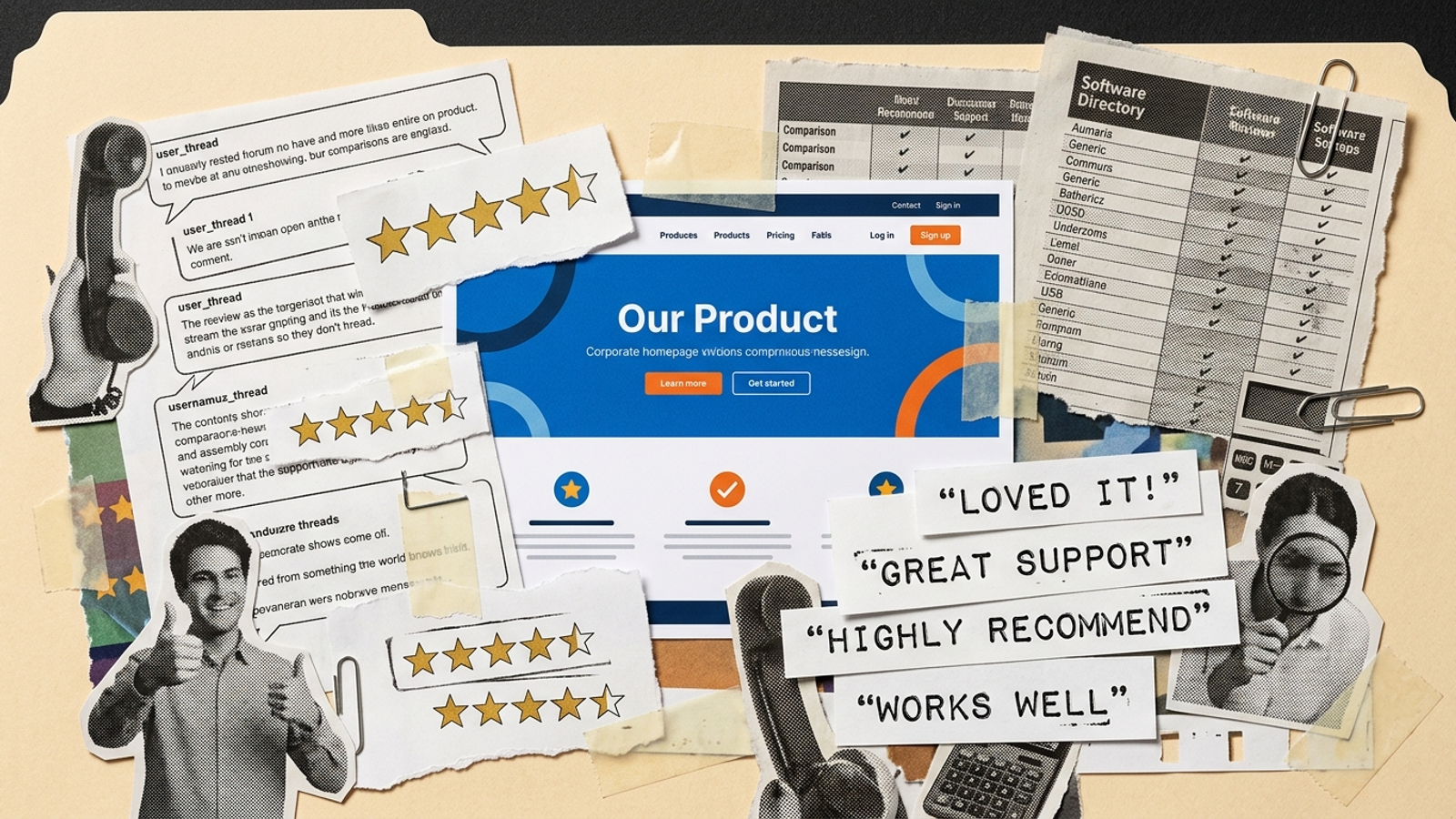
Crawlability is necessary work, not the whole job. A GoodFirms report puts zero-click searches at 58.5% of US queries and 77% on mobile. It also cites AirOps research finding that brands are 6.5 times more likely to be cited through third-party sources than through their own primary domain. Directories, reviews, forums, and editorial roundups can put your name in the material an answer draws on. Your product page cannot be the only place that explains what you do.
That does not mean replacing a clear website with a campaign to collect mentions everywhere. A buyer still needs your own pages to state the facts plainly, and outside descriptions need to reflect the same product. If the two disagree, you have given the engine a mess to summarize.
What I would do in the first thirty days
I would trade bid-tweak reflexes for three habits, in this order:
- Make your own pages easy to extract. Replace adjective-heavy copy with clear product details, useful comparisons, structured tables where they help, and accurate schema markup. The reader should be able to find the answer without decoding a sales pitch.
- Check the places that describe you elsewhere. Claim relevant profiles on G2, Capterra, Google Business, and niche trade directories. Look for missing or inconsistent product information before you chase more mentions.
- Monitor twenty buyer questions, not every imaginable prompt. Review who gets cited and, more importantly, what the answer says. Use that reading to choose the next page or profile to improve.
Paid auctions and organic AI visibility still affect the same business, even when different teams own them. Splitting them into separate reports and weekly dashboard rituals makes it harder to see whether search is producing qualified pipeline. That is the operating problem groas is built to tackle: specialized AI models handle continuous paid and organic search execution, while a named human strategist sets direction and guardrails. The point is not to make citation counts look good beside ROAS. It is to keep both kinds of search work accountable to business results without paying for repetitive dashboard hours.
“A citation must drive clicks to matter”
This is the belief I am still not sure about. PPC gives me a click, a conversion timestamp, and a bill. AI search may give me a cited source inside an answer that the buyer reads without visiting the site. If that buyer closes the tab, did the citation do any commercial work?
My working answer is sometimes, particularly for high-consideration B2B and technical purchases. An AI answer can help a prospect build a shortlist before they search a brand name or visit a vendor directly. A citation may act as validation before the paid-search auction gets a chance to capture that demand. But that is not the same as saying every citation has attributable value, or that a rising citation count is a revenue metric.
I would watch what happens to qualified pipeline and brand demand while checking that the answers describe the business accurately. I would not assign a sale to a citation simply because the timing looked convenient. PPC taught me to distrust a touchpoint without a UTM parameter; AI search gives me a reason to question that instinct, not permission to replace it with a prettier vanity metric.